Hydrogen water bathing has special value for the skin. Due to the strong diffusion ability of hydrogen, the bathing method is very beneficial for skin tissue to obtain a sufficiently high hydrogen partial pressure at an extremely fast speed. Last New Year's Day, the day after my infection, I had severe back pain. Without taking medication, I took a 30 minute bath and the pain almost completely subsided. Since then, it has not appeared again. This is clearly due to the powerful effect of hydrogen gas in combating inflammation. Of course, both my personal experience and the six person cases reported in this study are relatively weak evidence. But after 16 years of research accumulation, the evidence that hydrogen has anti-inflammatory and antioxidant effects is very clear. In the past century, research in diving medicine has gained a better understanding of the human safety of hydrogen and the basic operating rules of hydrogen in the body. In order to enable this highly safe and effective biological effector molecule to be applied in clinical and health fields as soon as possible, it should be time to promote large-scale clinical research.
1、 Preface
Atopic dermatitis is a chronic recurrent, itchy, and eczematous skin disease that occurs simultaneously with allergic inflammation. Many patients with atopic dermatitis have atopic disease qualities, such as medical and/or family history of allergies or disease development related to the production of immunoglobulin E antibodies. Atopic dermatitis is caused by a combination of environmental factors such as stress, skin condition, and allergens (including dust mites, dust, and food). Its causes, clinical manifestations, and worsening factors vary. However, atopic dermatitis typically manifests as impaired skin barrier, release of inflammatory cytokines and chemical messengers, increased oxidative stress, and immune system dysfunction (such as Th1 and Th2 imbalance). These are closely related to the pathogenesis and deterioration of atopic dermatitis.
The surface stratum corneum of normal skin is used to prevent excessive skin moisture loss (transdermal moisture loss), The barrier of invasion by TEWL and allergens such as bacteria and external stimuli. However, the skin barrier function of patients with atopic dermatitis is impaired, leading to water loss and skin dryness. Therefore, various foreign substances, such as allergens and irritants, can easily penetrate the gaps of dry skin and be detected by immune and/or inflammatory cells, leading to allergic inflammation. Various bioactive substances, such as cytokines (interleukin-4) IL-13, IL-33, IL-25, IL-1 β, etc., chemokines (regulatory chemokines, macrophage derived chemokines, skin T cell chemokines, etc.), and chemical messengers (histamine, leukotriene B4, etc.) Substances such as P are released from various cells, such as inflammatory, immune, and epidermal cells, and form lesions through complex interactions in inflammatory skin lesions.
Oxidative stress antioxidant imbalance caused by reactive oxygen species (ROS) The imbalance of Th1/Th2 immunity or cytokines is closely related to the development and worsening/severity of atopic dermatitis. In addition, dry skin often leads to allergies. The sensory nerve fibers of normal skin terminate at the boundary between the epidermis and dermis; However, in dry skin, nerve fibers proliferate and extend below the stratum corneum that forms the surface of the skin. Various itching substances, such as cytokines, chemokines, and chemical messengers, are easily released into skin lesions and act on elongated nerve fibers; Therefore, itching is sensitively detected and enhanced. Especially, barrier dysfunction leads to susceptibility to various external stimuli and allergens. Therefore, even mild stimulation can cause itching, promote scratching behavior, and further damage the skin barrier, forming a vicious cycle called a negative spiral.
Hydrogen molecules (H2) have excellent antioxidant and anti-inflammatory effects, as well as anti apoptotic, anti allergic, and energy metabolism activation effects. The biological safety of hydrogen water has been confirmed in mutagenicity tests on several bacteria, genotoxicity tests on Chinese hamster lung fibroblasts (CHL), and subchronic oral toxicity tests in rats. Hydrogen has also been proven to be non cytotoxic and safe for humans, even at high concentrations, as evidenced by the use of hydrogen containing respiratory gases in deep-sea diving studies and intravenous injection of hydrogen in patients with acute cerebral ischemia. Therefore, its medical application is expected to become a new strategy to prevent and treat many diseases, such as diabetes, atherosclerosis, cognitive impairment, cancer and allergy.
Among various beneficial effects, drinking hydrogen water eliminates direct types of allergic reactions through free radical scavenging activity in mice. Regarding atopic dermatitis, drinking hydrogen water improved the dust mite allergen induced and 2,4-dinitrochlorobenzene induced atopic dermatitis in NC/Nga mice with atopic dermatitis. These effects are related to antioxidant stress, selective ROS clearance, decreased levels of inflammatory cytokines, inhibition of immunoglobulin E antibodies, and improvement of cytokine or immune imbalance. We have previously demonstrated that drinking hydrogen water reduces the severity of atopic dermatitis like skin damage, such as erythema/bleeding, edema, erosion/epidermal shedding, and dryness, which is associated with TEWL inhibition, mast cell infiltration, secretion of inflammatory cytokines (such as IL-1 β and IL-33) in skin damage, and serum TARC inhibition. In addition, severe hospitalized elderly patients with pressure ulcers who ingest hydrogen water through tube feeding have reduced wound size and early recovery [38]. These pieces of evidence indicate that drinking hydrogen water is effective in treating atopic dermatitis.
Hydrotherapy is another effective way to bring hydrogen into the body (in addition to drinking). Hydrogen can easily pass through the skin and circulate throughout the body. Therefore, hydrotherapy that directly absorbs hydrogen through the skin appears to be more effective in treating atopic dermatitis. A previous study showed that hydrotherapy suppressed skin damage caused by ultraviolet B radiation Increased ROS and increased activity of inflammatory cytokines (including IL-1 β IL-6、 Tumor necrosis factor alpha and interferon gamma).
In healthy individuals, hydrogen water bathing can not only increase skin elasticity and moisture content, but also clean pores blocked by keratin, promoting blood flow in capillaries. In addition, hydrogen water bathing significantly improved the wrinkles in the posterior neck of healthy female volunteers (31.5 ± 11.4 years old), which is related to the promotion of ROS clearance and type I collagen synthesis in the dermis. A case study report stated that hydrogen water bathing improved extensive skin spots on the left calf of a 41 year old female patient, as well as years of acne and dry skin on the back and chest of a 48 year old female patient. In another study, hydrogen water baths reduced the severity of chronic inflammatory skin disease, psoriasis, and plaque like psoriasis, as assessed using the Psoriasis Area Severity Index score and the Pruritus Scale (VAS). These findings suggest that hydrogen water baths may be effective in treating atopic dermatitis. However, to our knowledge, there has been no scientific investigation into the therapeutic effect of hydrogen water baths on patients with atopic dermatitis.
Therefore, the aim of this study is to determine whether hydrogen water baths may have therapeutic effects in a preliminary study of 6 patients with atopic dermatitis based on itching (evaluated using VAS) and TEWL values, as well as in a visual observation of the severity of atopic dermatitis.
2、 Materials and Methods
2.1 Participants and ethical statements: This study included six patients with atopic dermatitis (one male and five females, mean age: 39.2 ± 3.40 years) and seven healthy adult volunteers (two males and five females, mean age: 31.4 ± 2.9 years) as the control group. All participants have signed informed consent forms. All procedures conducted in this study comply with the Helsinki Declaration and ethical guidelines for medical and health research involving human subjects. This study was approved by the Medical Corp Koyokai (KEC-2017-01) Ethics Committee.
2.2 Experimental design 2.2.1 The severity of atopic dermatitis between patients and healthy subjects was evaluated by visual observation (photography), self-assessment of VAS itching intensity, and TEWL values of skin lesions to assess the severity of patients with atopic dermatitis (n=6). These evaluations were conducted when the patient first visited the Traditional Chinese Medicine Clinic at Juntendo Hospital (Tokyo, Japan). The patient's data was compared with the data of healthy subjects (n=7). Each subject undergoes a nighttime VAS assessment at home (before bedtime).
2.2.2 Hydrogen water bath effect 2.2.2.1 To evaluate the therapeutic effect of hydrogen water bath on atopic dermatitis, five out of six patients took a 30 minute bath at home with hydrogen water at a temperature of 38 ° C to 40 ° C, once a day in the afternoon, for eight weeks (56 days). All participants self evaluated the degree of itching twice a day, during the day and at night (before bedtime), using VAS during the experiment. We summarize this data every week and calculate the daily average. The TEWL measurements of skin lesions in all patients were taken between 15:00 and 17:00 in the Traditional Chinese Medicine Outpatient Department of Juntendo Hospital, during the experimental weeks 0 (pre data), 4, and 8, respectively.
2.2.2.2 Only one out of six patients was included in the evaluation of the specificity and persistence of the effect of hydrogen bath on atopic dermatitis. The subject first underwent a four week hydrogen bath at home, then stopped for two weeks (during which normal bathing instead of hydrogen bath), and then continued with a four week bath. In a ten week (seventy day) experiment, participants used VAS twice a day during the day and at night (before bedtime) to self evaluate the degree of itching. We summarize this data every week and calculate the daily average. During weeks 0, 4, 6, 8, and 10 of the experiment, we took photos and measured the TEWL values of the skin lesions at the Traditional Chinese Medicine Clinic of Juntendo Hospital between 3:00 pm and 5:00 pm.
2.3 Using a hydrogen generator to prepare a hydrogen water bath using a pot type hydrogen generator (Hydrogen SPA) ® H-Pot, Equipment size; Width 140mm x depth 140mm x height 190mm, Gohda Water Treatment Technology Co., Ltd. (Tokyo, Japan) produces hydrogen gas in bathtubs containing warm water. The hydrogen generation in this device is carried out through the "metal magnesium reaction method", where metal magnesium (Mg) reacts with water to generate hydrogen gas, and the reaction is as follows: Mg+2H2O → Mg (OH) 2+H2. In short, after removing the large hole cover of the pot type equipment, place four magnesium cores (core size: width 73mm x depth 35mm x height 70mm, magnesium purity>99.9%) at the bottom of the equipment. After covering the top cover, add about 4 grams of citric acid as a catalyst (activator) for hydrogen gas generation through the holes on the top cover, and then pour in warm water. Allow the device to stand for 2-3 minutes to promote hydrogen production. After confirming that sufficient hydrogen gas has been generated, immerse it in a bathtub containing bath water (temperature range from 38 ° C to 40 ° C). The magnesium core in the equipment continues to generate hydrogen gas in the bath water. After the subject takes a 30 minute bath, remove the device from the bath water, let it dry naturally, and store it before the next use. The hydrogen concentration measured using the ENH-2000 portable dissolved hydrogen meter (Sato Shouji Inc. Kanagawa, Japan) was 294 ppb in 320 liters of warm water (temperature range 38 ° C -40 ° C).
2.4 The use of VAS to assess itching is an internationally recognized scale widely used to quantify subjective clinical symptoms such as itching, consisting of a 100mm long line and a question. The left endpoint (0 millimeters) represents "no itching", and the right endpoint (100 millimeters) represents "the most unimaginable itching". The patient marked the degree of itching they felt online. The intensity of itching is quantified as a VAS score by measuring the distance from the 0 millimeter point.
2.5 TEWL assessment: Before conducting TEWL measurements, subjects were acclimated to room temperature (24 ° C -25 ° C) and 50% -55% humidity for 30 minutes. At the same time, the subjects marked their itchy area (rash area) on an illustrated paper displaying their entire body. Then, the doctor will examine the itchy areas and measure the TEWL levels in these areas using a TM300 Parameter probe connected to the MDD4 multi display device. In addition, take photos of the affected area as needed
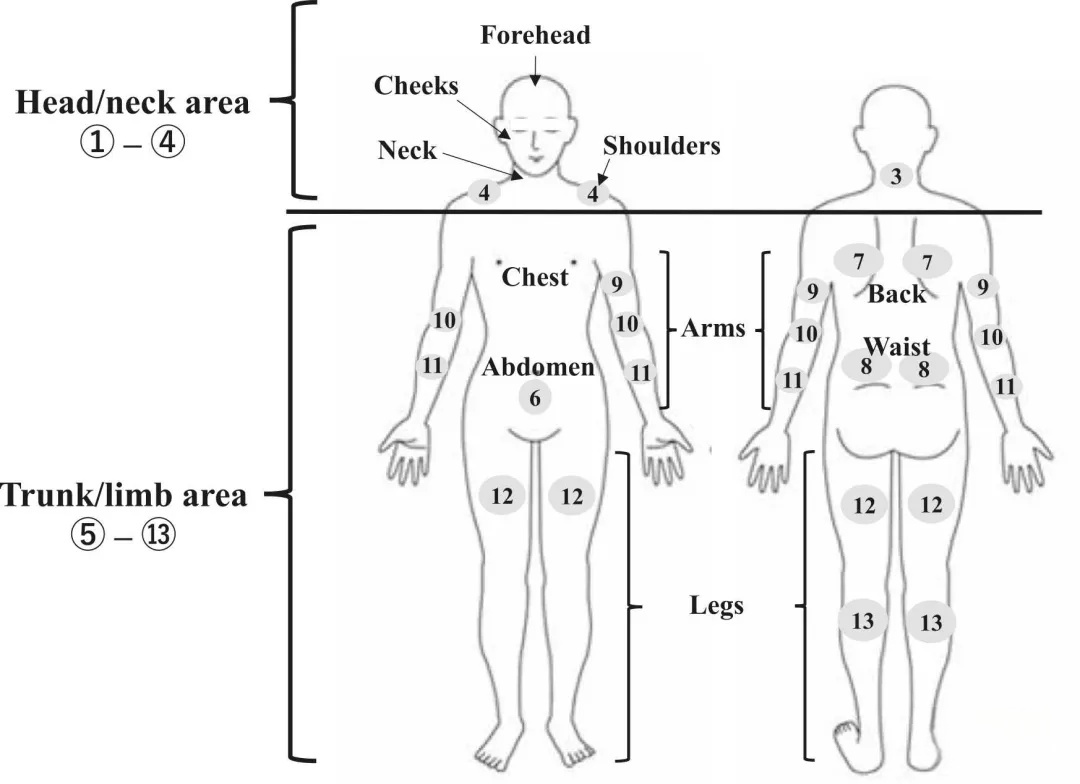
Therefore, the final evaluation was conducted by dividing the measured values into two regions: "head/neck" and "trunk/limbs". The "head/neck" includes ① the forehead, ② the cheeks, ③ the neck, and ④ the shoulders, all of which are not fully immersed in the bath water; The trunk/limbs include the chest, abdomen, back (including waist), and limbs (arms and legs), all of which are fully immersed in the bath water. The TEWL values in two regions of the atopic dermatitis group are expressed as the average of the measured values for each observed lesion site in six patients with atopic dermatitis. (This partitioning method is very good, as it has a comparative effect and can further understand the strength and reliability of hydrogen water action.)
Image
Figure 1. The explanatory table displays the front and rear parts of the entire body, as well as the measurement sites for transcutaneous water loss (TEWL). The TM300 Parameter probe connected to the MDD4 multi display device was used to measure the TEWL levels of ① forehead, ② cheeks, ③ neck, ④ shoulders, ⑤ chest, ⑥ abdomen, ⑦ and ⑧ back (including waist), and ⑨ - æ limbs (arms and legs). Finally, the measured values were divided into two areas and averaged, including the "head/neck" (not fully immersed in the bath water) and the "trunk/limbs" (fully immersed in the bath water).
2.6 Statistical analysis
A comparative study on the severity of itching between patients with atopic dermatitis and healthy subjects was presented using VAS and TEWL data as the mean ± standard error (SEM) for each group of subjects. After non paired and non parametric Kruskal Wallis test, Dunnett multiple comparison test was used to evaluate statistical significance.
In an eight week hydrogen bath evaluation study, VAS and TEWL data were represented as the mean ± SEM of five patients with atopic dermatitis. After Friedman's paired non parametric test, Dunnett's multiple comparison test was used to evaluate statistical significance.
In a ten week evaluation study, The TEWL data is represented as the mean ± SEM of 20 measurement sites in a patient with atopic dermatitis. This study included hydrogen water bath, interruption, and re bath. After Friedman's paired non parametric test, Dunnett's multiple comparison test was used to evaluate statistical significance. Due to having only one subject, statistical analysis of VAS data was not conducted.
The threshold for statistical significance in this study was set to P<0.05.
(The impression given by this study to Hydrogen Siyu is that they soak in hydrogen water for 30 minutes every day for 56 consecutive days, and evaluate and collect data every day. Although the number of people is not large, the workload is not small. Hydrogen water is made of metallic magnesium, which is relatively rough, and the effect should also consider the factor of magnesium ions. Among them, some patients stopped bathing in hydrogen water for two weeks, and the occurrence of recurrent symptoms is very valuable, which further indicates that the effect of hydrogen water is very strong and specific.)
3、 Result
3.1 Severity of patients with atopic dermatitis compared to healthy control subjects
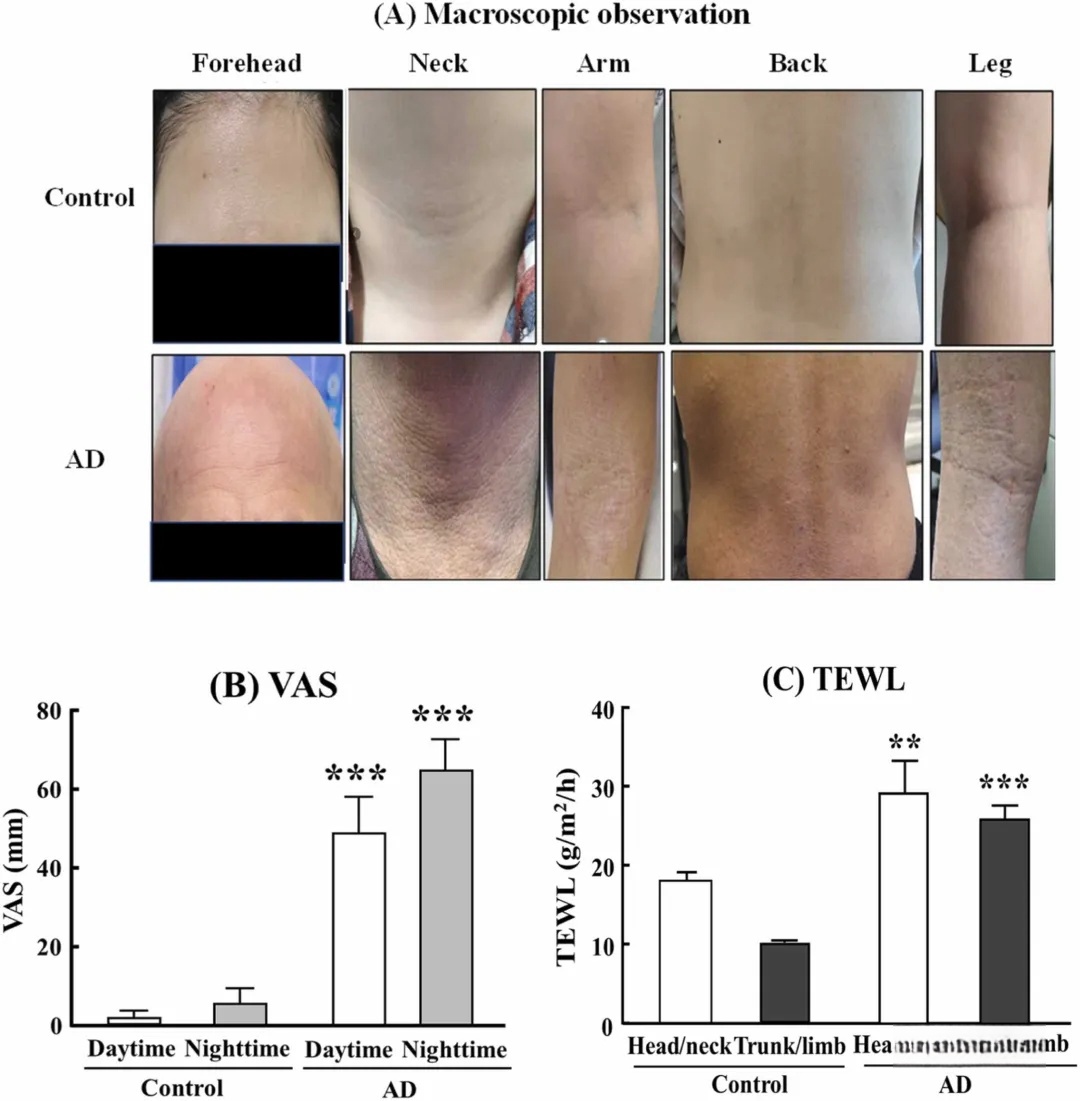
Figure 2A shows the skin condition of the forehead, neck, arms, back, and legs of patients with atopic dermatitis and healthy control group subjects. Compared with the control group, patients with atopic dermatitis developed rashes (eczema), dry skin, and scabs on the forehead, neck, arms, back, and legs. Figure 2B shows the daytime and nighttime itching intensity of patients with atopic dermatitis and the control group using VAS self-assessment. The daytime and nighttime VAS scores of patients with atopic dermatitis significantly increased, indicating that the itching intensity of atopic dermatitis patients was stronger than that of the control group. There was no significant difference in the intensity of itching between patients with atopic dermatitis during the day and at night; However, nighttime itching is stronger than daytime itching. Figure 2C shows the TEWL values of patients with atopic dermatitis and control group subjects. The TEWL values in the head/neck and trunk/limbs regions of patients with atopic dermatitis significantly increased, indicating that the affected skin areas were significantly drier than those in the control group.
Image
Figure 2. Comparison of severity between patients with atopic dermatitis and healthy control subjects. The severity of atopic dermatitis patients is evaluated through the following methods: (A) macroscopic observation, (B) assessment of itching intensity using visual analogue scale (VAS), and (C) TEWL value of skin damage. (A) The photo shows typical skin conditions of patients with atopic dermatitis and control group subjects on the forehead, neck, arms, back, and legs. (B) All subjects underwent self-assessment twice a day, during the day and at night (before bedtime), using VAS to assess the degree of itching. (C) Measure the TEWL values of corresponding areas in patients with atopic dermatitis and healthy control group using a TM300 Parameter probe connected to MDD4 multi display device.
3.2 The improvement effect of hydrogen water bath on dermatitis
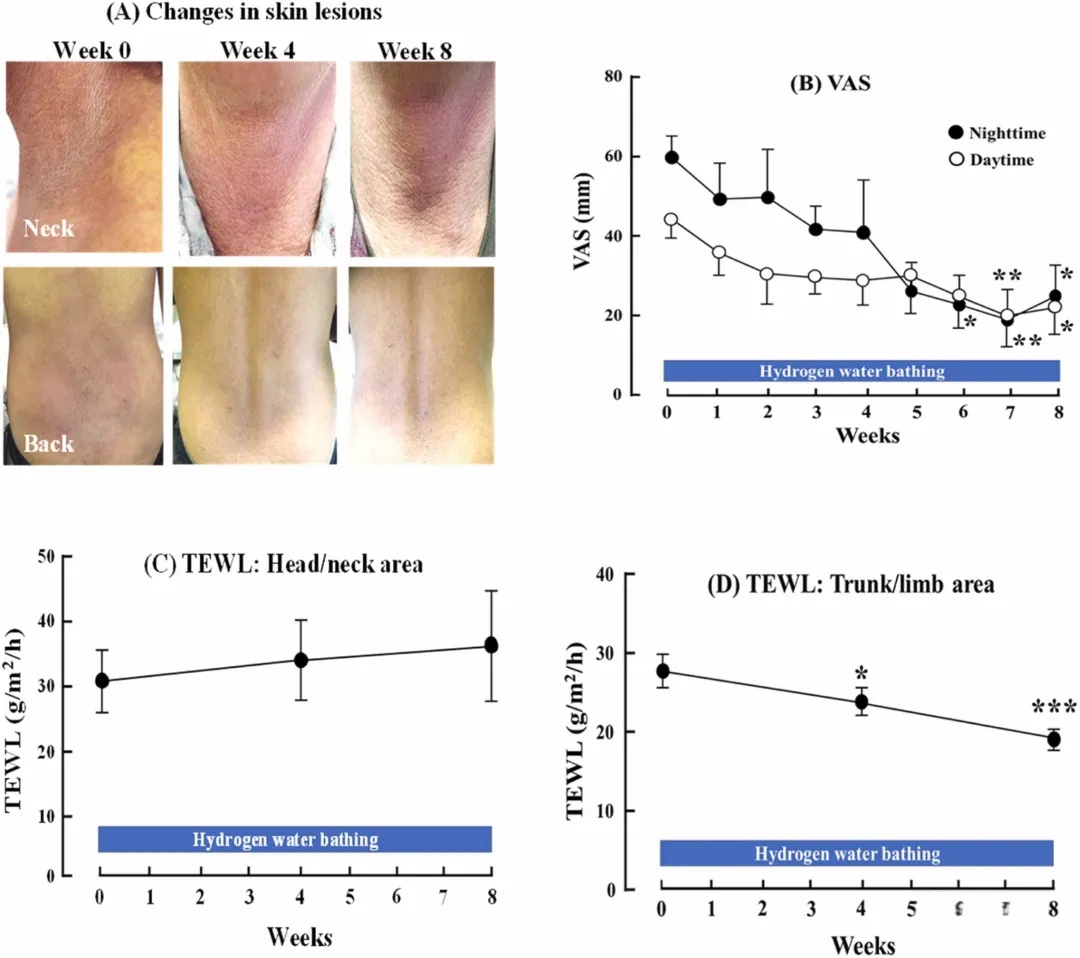
Figure 3. Changes in skin lesions and VAS and TEWL values in patients with atopic dermatitis treated with hydrogen water bath for eight weeks. (A) The photo shows typical skin lesions in the neck and back of the patient before treatment (week 0) and at weeks 4 and 8 of treatment. (B) Patients with atopic dermatitis undergo self-assessment twice a day, during the day and at night (before bedtime), using VAS to assess the degree of itching. (C and D) Use TM300 Parameter probes connected to MDD4 multi display devices to measure TEWL values in the head/neck and trunk/limb regions of patients with atopic dermatitis.
Figure 3 shows the changes in skin lesions and VAS and TEWL values in patients with atopic dermatitis who received hydrogen water bath treatment for eight weeks. Neck (throat) rash, not fully immersed in bath water, with a slight downward trend but no significant improvement. At the same time, the rash on the trunk/limbs area that was fully immersed in bath water significantly improved during the eight week hydrogen bath period (Figure 3A). The VAS score before bathing (week 0) increases more at night than during the day; However, there was no significant difference between the two, and the VAS levels in both time zones gradually decreased during an eight week hydrogen bath period. Starting from the seventh and eighth week after bathing, there was a significant decrease in VAS levels during the day and night (Figure 3B). Figures 3C and D show the changes in TEWL values in the head/neck and trunk/limb regions after hydrogen water bath. As mentioned earlier, the rash on the head/neck slightly improves after bathing; However, during the eight week hydrogen bath, There was no significant difference in TEWL values (Figure 3C). Meanwhile, in areas of the trunk/limbs that exhibit improved bursts, The TEWL value significantly decreased during the 4-8 weeks after bathing in hydrogen water for eight weeks (Figure 3D). The results showed that exposure to hydrogen water increased the moisturizing ability of skin lesions and improved dry skin.
3.3 Specific therapeutic effects of hydrogen water bath on symptoms of atopic dermatitis
A study was conducted on the specific therapeutic effect of hydrogen water bath on atopic dermatitis symptoms in a patient with back rash (eczema). The subjects first underwent a four week hydrogen water bath treatment, interrupted for two weeks, and then resumed the four week treatment. Figure 4A shows the changes in back skin lesions during a series of procedures, including interruption and recovery of hydrogen water bath therapy. The back rash improved significantly after four weeks of hydrogen bath treatment (photo from the fourth week). However, after interrupting hydrogen bath treatment for two weeks, the improved area deteriorated (photo from the sixth week: eczema recurrence). After resuming the four week hydrogen bath treatment, the recurrent rash was resolved (photo from the tenth week).
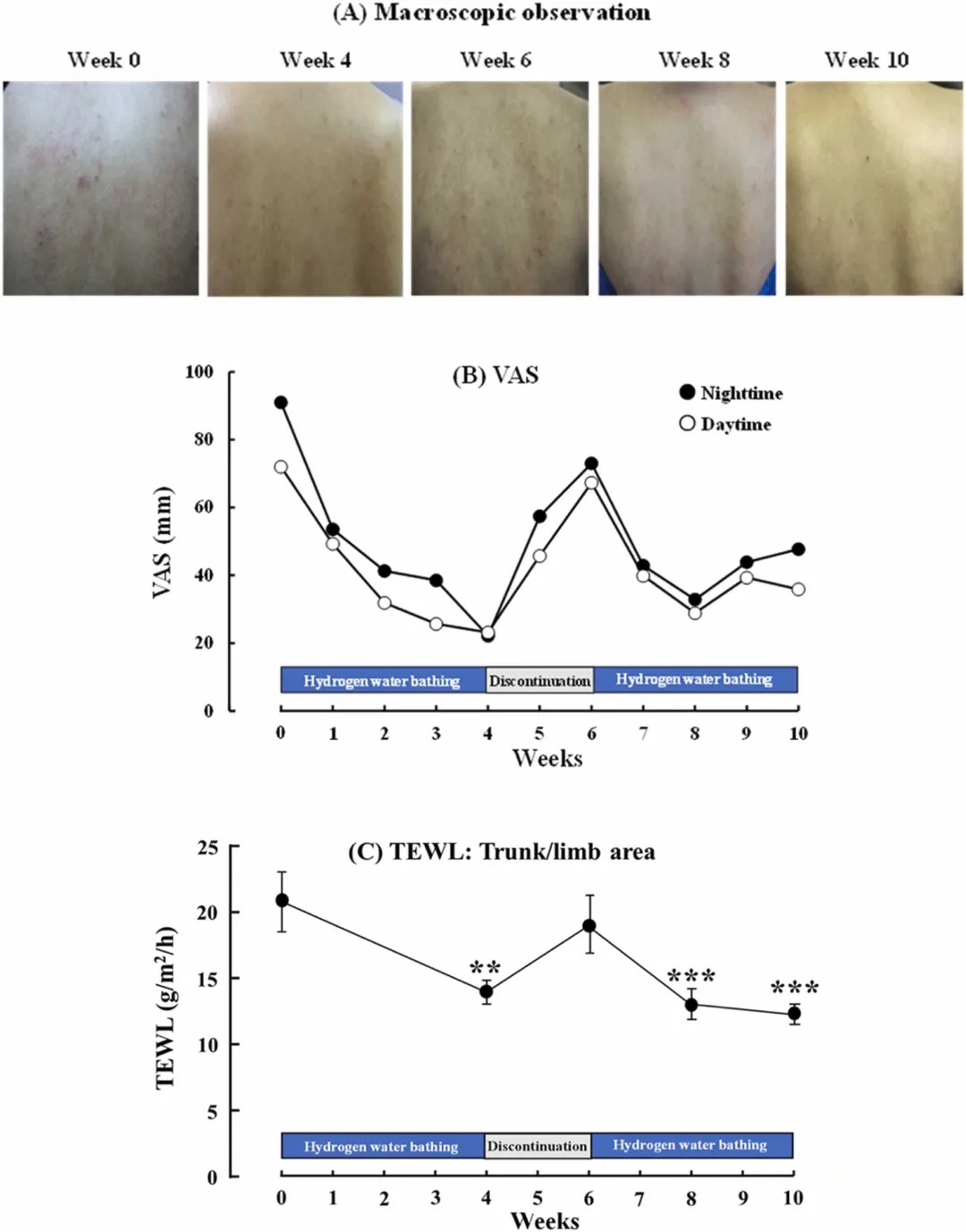
Figure 4. Specific therapeutic effects of hydrogen water bath on atopic dermatitis symptoms. A patient with atopic dermatitis first underwent a four week hydrogen bath, discontinued for two weeks, and then resumed the four week hydrogen bath. (A) Changes in back skin lesions were observed during a series of processes. (B) Changes in the daytime and nighttime itch index VAS score during this study. (C) The change in TEWL value of skin dryness index measured using TM300 Parameter probe connected to MDD4 multi display device. The data is represented as the average ± SEM of 20 measurement points in the skin lesion area of a patient with atopic dermatitis. Evaluate statistical significance using Dunnett's multiple comparison test after paired non parametric Friedman test.
The VAS and TEWL values in the affected area reflect changes in skin condition. Especially, The VAS score was higher during the day and night at week 0, decreased after four weeks of hydrogen bath, increased again after stopping for two weeks, and decreased again after resuming hydrogen bath for four weeks (Figure 4B). The TEWL value is higher at week 0, decreases after four weeks of hydrogen water bath, rises again after stopping for two weeks, and decreases again after restarting the hydrogen water bath for four weeks (Figure 4C).
4、 Discussion
This is a preliminary study aimed at determining whether hydrogen water baths may have the potential to treat atopic dermatitis. In this study, patients with atopic dermatitis had obvious skin rashes accompanied by severe itching and dryness. The patient's itching and dryness were supported by a significant increase in VAS scores and TEWL levels (Figure 2). These symptoms in the trunk/limbs of patients with atopic dermatitis significantly improved after eight weeks of hydrogen bath (Figure 3). A study was conducted on patients with dermatitis (eczema) in the trunk/limbs to further investigate the specificity of hydrogen bath for atopic dermatitis (Figure 4). After four weeks of hydrogen bath, the rash on the trunk/limbs significantly improved, but the condition worsened after two weeks of discontinuation and improved again after four weeks of recovery from the hydrogen bath. VAS and TEWL values also reflect changes in skin condition. These results indicate that hydrogen water baths may help alleviate symptoms of atopic dermatitis, but also emphasize the phenomenon that interrupting hydrogen water baths may lead to symptom recurrence.
At present, various methods have been established in the field of hydrogen medicine, such as drinking hydrogen water, inhaling hydrogen, injecting physiological saline dissolved in hydrogen, and using hydrogen water baths to provide hydrogen molecules to the body. Due to its ability to penetrate the skin and distribute throughout the body through the bloodstream, hydrogen water baths that directly act on the skin may be more effective in treating atopic dermatitis. In fact, according to reports, hydrogen water baths can improve skin conditions such as skin elasticity, capillary blood flow, wrinkles, skin spots, papules, and dry skin. The relieving effect of hydrogen water bath on skin condition may be stronger than the relieving effect of hydrogen intake and absorption/distribution to body tissues (due to the direct effect of hydrogen permeation into the skin). This is because, as mentioned earlier, hydrogen water bath showed an 8-week improvement in the skin condition of the trunk/limbs area in patients with atopic dermatitis, but had almost no improvement in the skin condition of the head/neck area (Figure 3). The difference in effectiveness of hydrogen water bath on the affected areas of atopic dermatitis may be due to the prolonged and sufficient immersion of the trunk/limbs area in the bathtub, while the immersion time in the head/neck area is shorter.
This study has several limitations. Firstly, considering the study design (including the small number of participants and short study duration), the effectiveness of hydrogen baths on atopic dermatitis should be evaluated as a possible effect rather than a definite effect. Therefore, the effectiveness of hydrogen baths needs to be supported by larger sample sizes and longer randomized controlled trials to determine their effectiveness against atopic dermatitis. Secondly, the recurrence of atopic dermatitis during hydrogen bath interruption, as well as the method of applying hydrogen water to areas that are difficult to continuously immerse in bathtub water. Regarding the former, we believe that habitual hydrogen baths are important.
In the future, it is necessary to investigate the recurrence rate among patients who have received habitual hydrogen water baths. For the latter, the facial or neck wrapping method should be applied, where cotton or thin sheets moistened with hydrogen water are in close contact with the facial or neck skin, allowing hydrogen gas to penetrate the skin. In the future, it is necessary to study the effectiveness of hydrogen water bath and facial/neck wrapping combined treatment for patients with atopic dermatitis. In addition, it has been reported that drinking hydrogen water can improve the clinical manifestations of atopic dermatitis in several animal models of atopic dermatitis. This indicates that drinking hydrogen water may also be effective against human atopic dermatitis. Therefore, although clinical studies are needed in the future to confirm, combining hydrogen water baths with hydrogen drinking water may be an effective method to address this issue.
5、 Conclusion
This study suggests that hydrogen water baths may be useful for treating atopic dermatitis. In the future, larger sample sizes and longer duration randomized controlled trials are needed to draw reliable conclusions on the effectiveness of hydrogen water bath treatment for atopic dermatitis.