The global household hydrogen-oxygen machine market is witnessing explosive growth in 2026, stepping into a critical transition period from chaotic barbaric growth to standardized and high-quality development. With the official implementation of the 2026 China Rehabilitation Assistive Devices Catalog and the release of new civil hydrogen-oxygen equipment industry standards, the entire track has ushered in a comprehensive reshuffle, becoming one of the most popular segmented tracks in the home health industry this year.
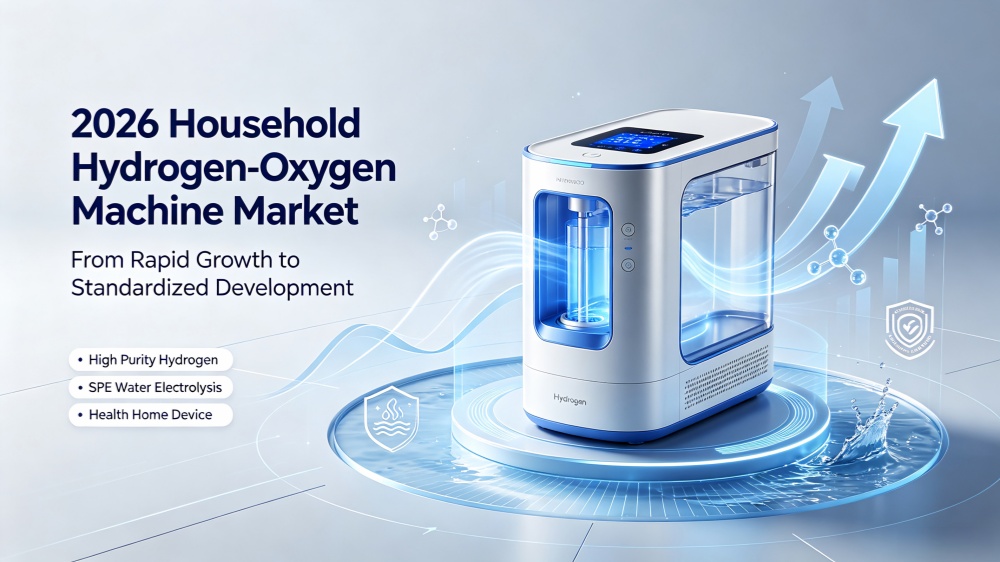
In recent years, consumer awareness of hydrogen health has continued to spread, driving the rapid expansion of the household hydrogen equipment market. At present, the market has formed three mainstream categories: hydrogen-oxygen machines, pure hydrogen inhalers, and hydrogen-rich water cups. Among them, hydrogen-oxygen machines stand out with their wide flow adaptability, high safety and cost performance, and have become the first choice for family health care users, occupying the largest market share in the civil hydrogen health segment.
Before the introduction of the new industry rules, the hydrogen-oxygen machine market was mixed with good and bad products. The market was flooded with low-cost alkaline electrolysis equipment, which had hidden dangers such as corrosive impurities, unstable gas purity and short service life. Many small brands relied on false parameter labeling and low-end refitting to seize the market, resulting in uneven product quality and frequent consumer complaints, restricting the standardized development of the industry.
The 2026 new industry standard completely changes the market pattern. It clearly stipulates that household hydrogen-oxygen health equipment must adopt SPE solid polymer pure water electrolysis technology, completely banning alkaline electrolysis products from entering the civilian household market. Meanwhile, the industry has set a unified high threshold of 99.999% ultra-high gas purity, which effectively eliminates backward production capacity and unqualified small and medium-sized manufacturers.
Compliance qualification has become the core watershed for brand competition in the hydrogen-oxygen machine industry in 2026. Formal mainstream brands rely on standardized production processes, stable core configuration, complete qualification certification and perfect after-sales service system to gain user recognition. In contrast, OEM brands with no independent production capacity, incomplete qualifications and missing after-sales services are gradually being cleared out of the market.
In terms of consumer selection logic, users are no longer blindly pursuing ultra-large gas flow and low price. More and more consumers begin to pay attention to core indicators such as electrolysis technology, gas purity, equipment stability, and later maintenance and consumable costs. Low-consumption, long-life, fully compliant high-purity hydrogen-oxygen machines have become the mainstream consumer demand.